Octet
Octet is an immersive experience that simulates a distributed intelligence neural structure through sensory connection to encourage collaborative behavior.
context
+ nhu phung, colin nations ecocentric future lab Biodesign Challenge, TTT
role
lead developer UX designer
timeline
fall 2024 6 weeks
tools
python, socket.io arduino + TENS unit HTML/CSS/JS
// background
Human exceptionalism is the belief that we, humans, exist independently of the ecosystems we live in. It is a learned cultural phenomenon—simply coming up with scientific solutions to systemic issues does not address the underlying cognitive processes that lead to apathy for the greater community and future generations. How can we adjust these hyper-individualist worldviews to inspire greater empathy for a larger group we can’t immediately communicate with, and increase concern for larger issues that don’t affect our immediate lives?
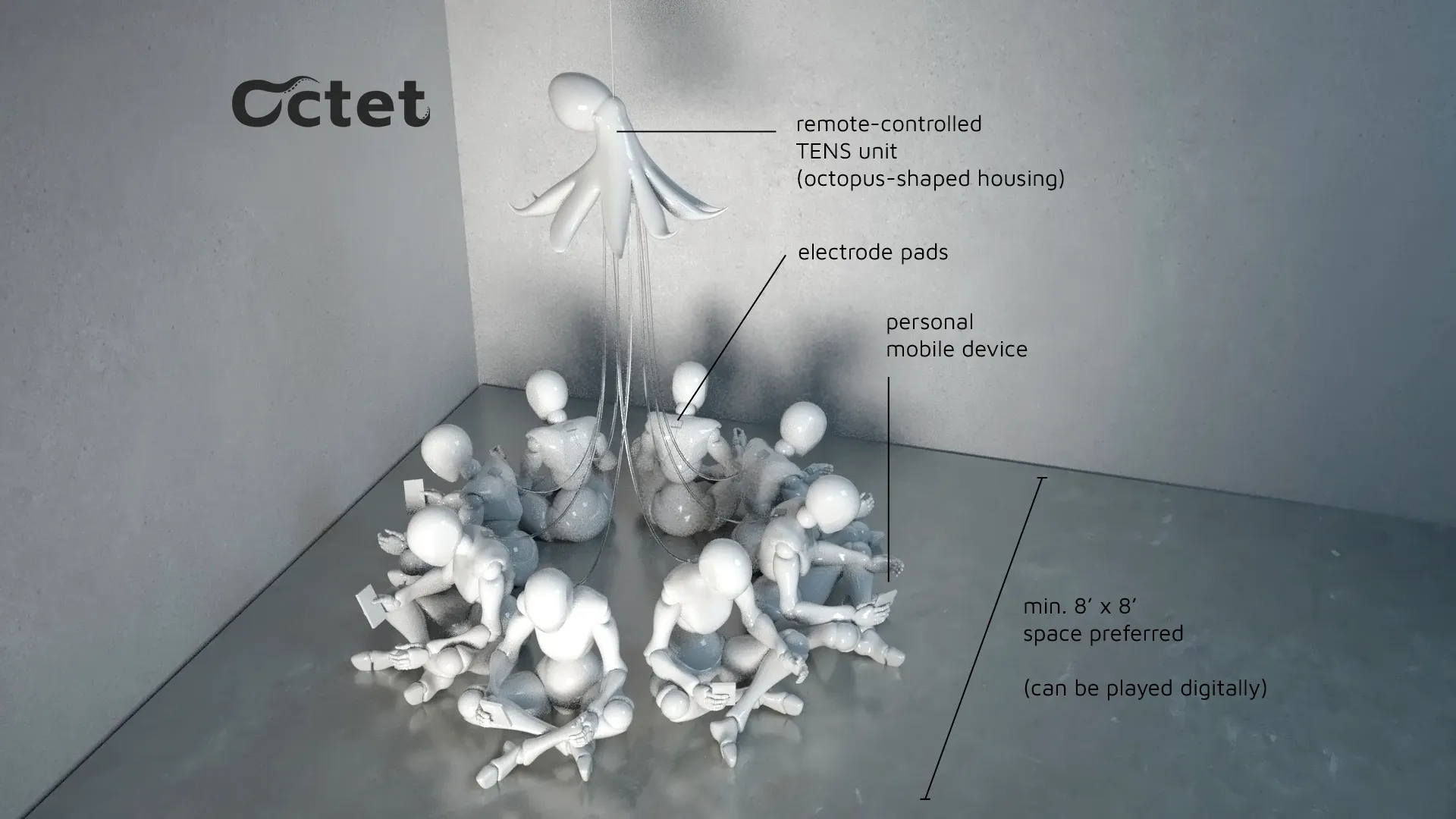
We developed Octet, a multiplayer, immersive sensory game experience where collective-based thinking is rewarded and the social/environmental consequences of individualism are shared. Inspired by the distributed intelligence of an octopus's tentacles, players are linked sensorially with a modified TENS device to induce a visceral sensation of interconnectedness. By increasing the stimulation voltage according to the game outcomes, we transform this connection into social responsibility and encourage collective-driven decision making.
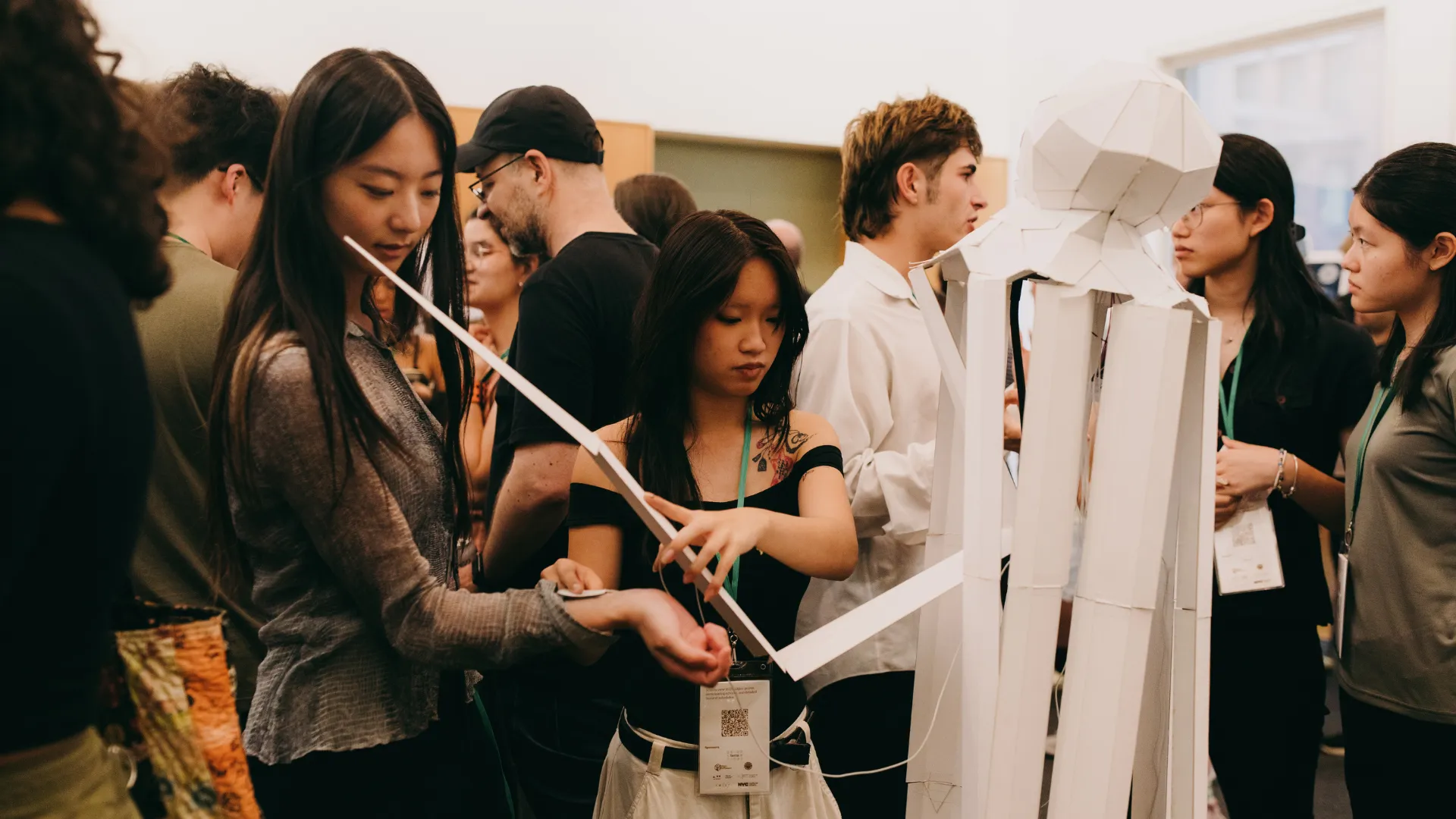
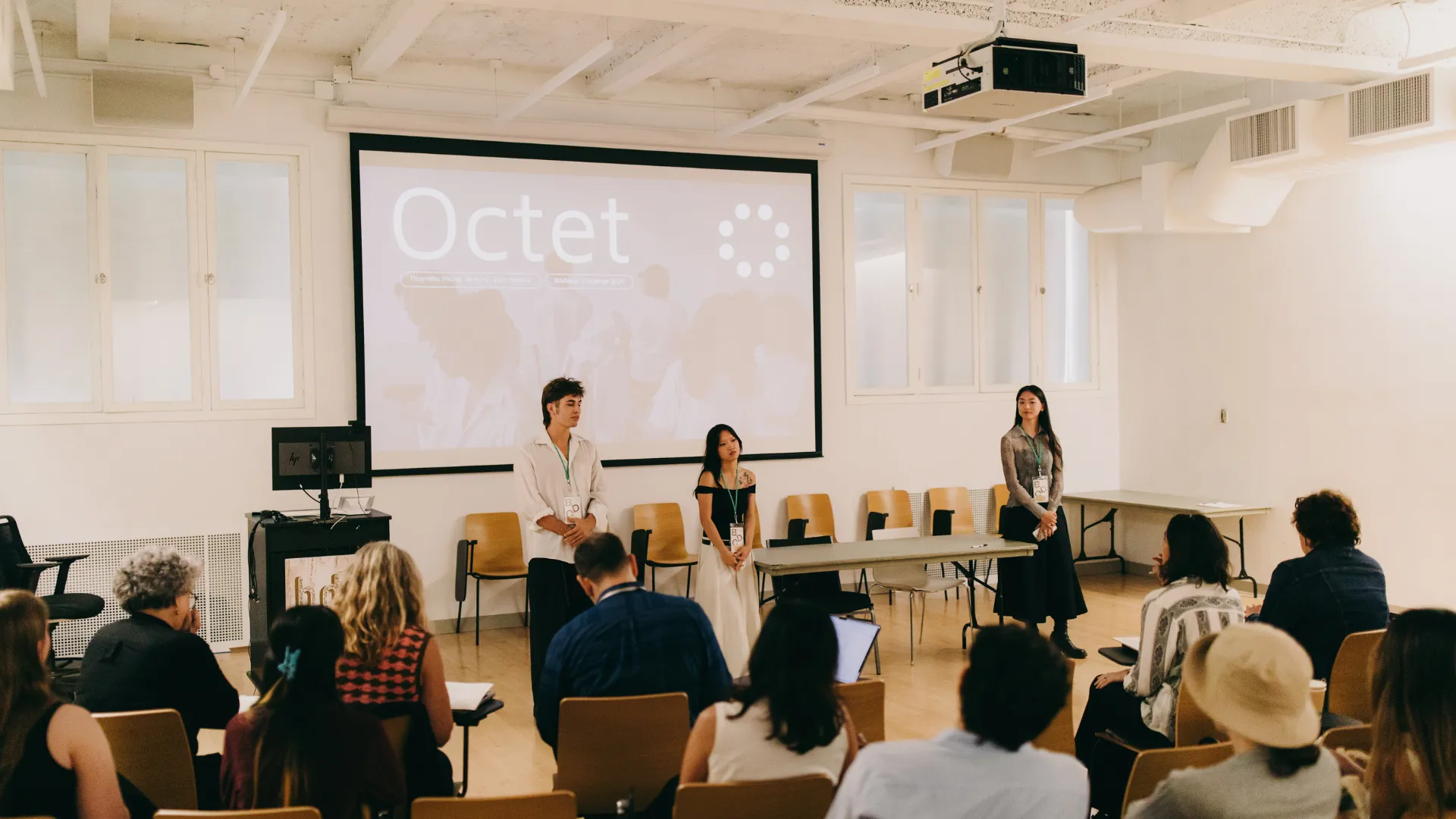
Octet was chosen to represent the University of Texas at Austin as a finalist at the Biodesign Challenge 2025, held at Parsons and MoMA. Octet also showcased at TABOO-TRANSGRESSION-TRANSCENDENCE 2025 in Ljubljana.

// research
Although there are benefits to humanity's individualistic drives and separate consciousnesses, we stand to gain from studying the benefits of more collective species like passerine birds or fish, or species with distributed intelligence like octopi.
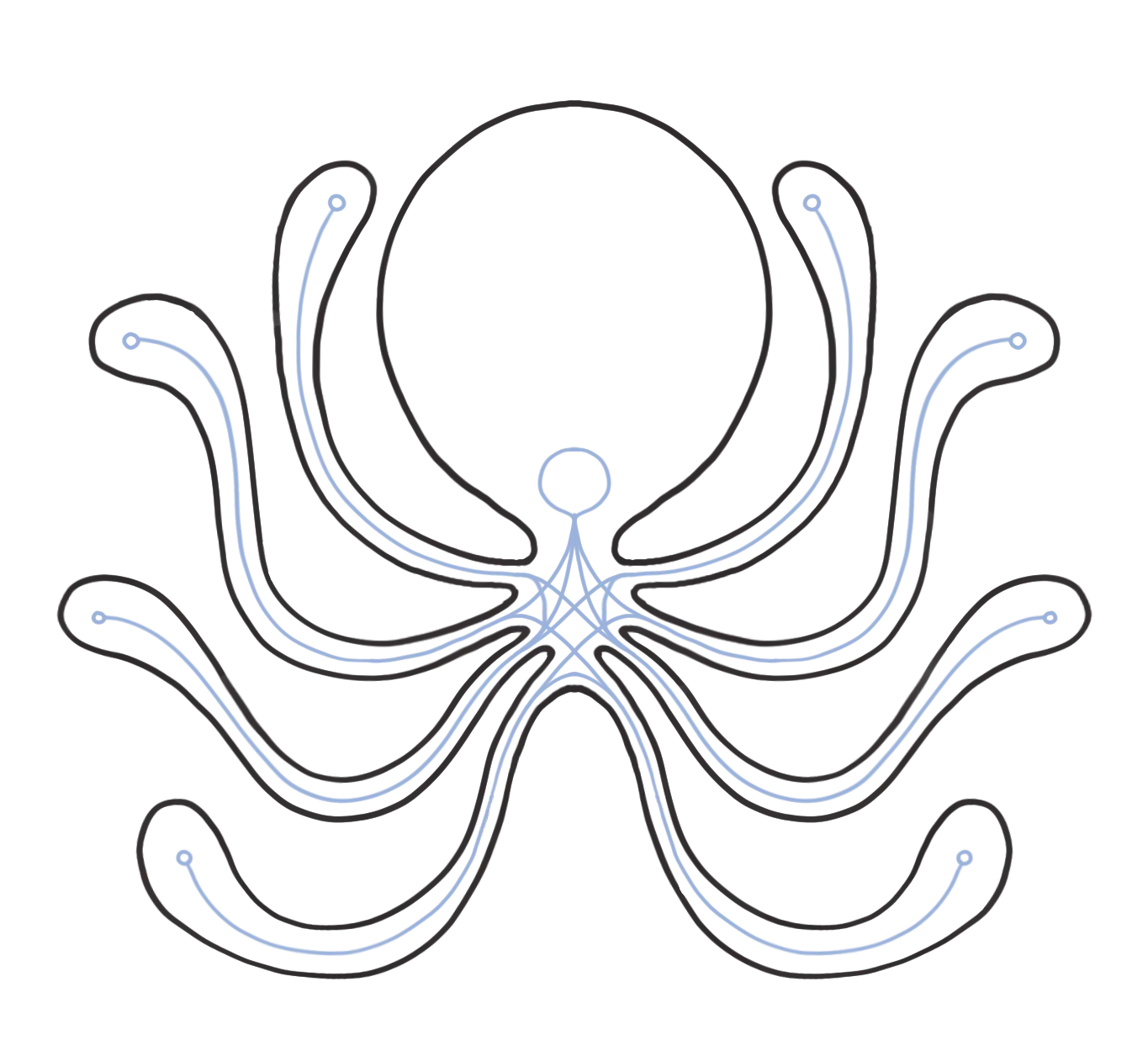
Octopus Neural Structure
The neural structure of the octopus is not central like a human's, and challenges the notion of the central "consciousness" since their neurons are distributed through their tentacles. 10% are in the central brain, 30% in the optic lobes, and 60% in the tentacles. The brain does not direct a singular arm--arms can perform actions independently, even when detached from the body.
Human Neural Structure
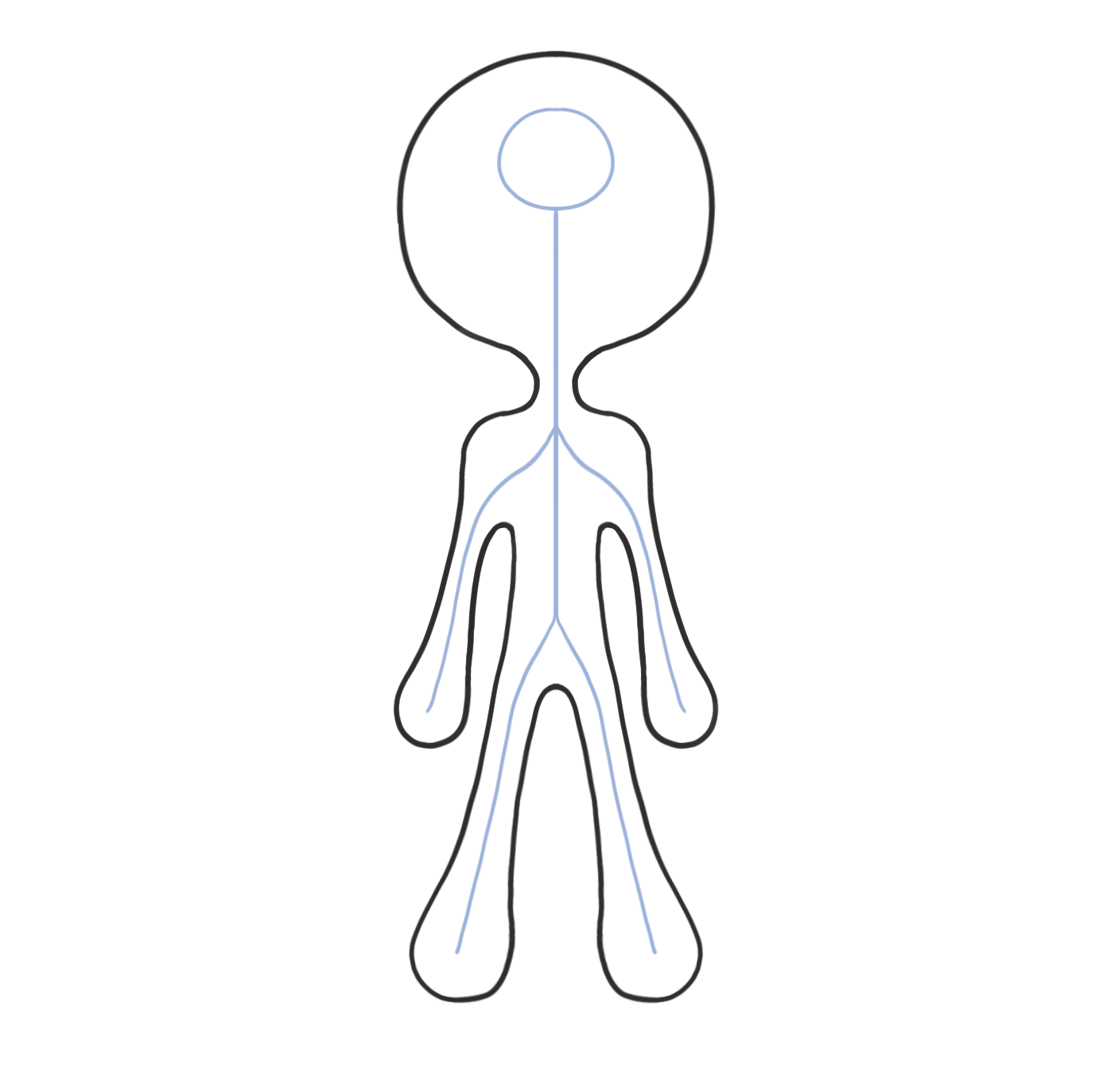
Humans, on the other hand, have a unary system with our entire consciousness centralized into one field of sensory experience. Our brain controls our body's movements and processes the senses received from different parts. We are independent actors in life and act as such. However, what if we were part of a larger organism, with each person receiving and processing sensory input and having a distinct consciousness, but physically connected and dependent on the other parts of the larger organism for survival? How would that affect our choices, our beliefs, our concept of self?
// concept
We developed Octet, a multiplayer, immersive sensory game experience where collective-based thinking is rewarded and the social/environmental consequences of individualism are shared. By linking players to a nerve stimulation device that increases voltage according to the game outcome, we induce a visceral feeling of connection and responsibility and encourage collective-driven decision making.
Octet takes place in a speculative future Earth where human greed and overconsumption have led to ecological collapse and the decline of human civilization. In order to survive, humans have been placed in experimental groups called Octets where 8 people are sensorially linked and must make decisions as a collective to navigate this new world. Each player can vote on scenarios independently, like whether to raid a Megacorp base for resources and risk other members' safety, or stay back and risk starvation. However, their overall success depends on collaboration.
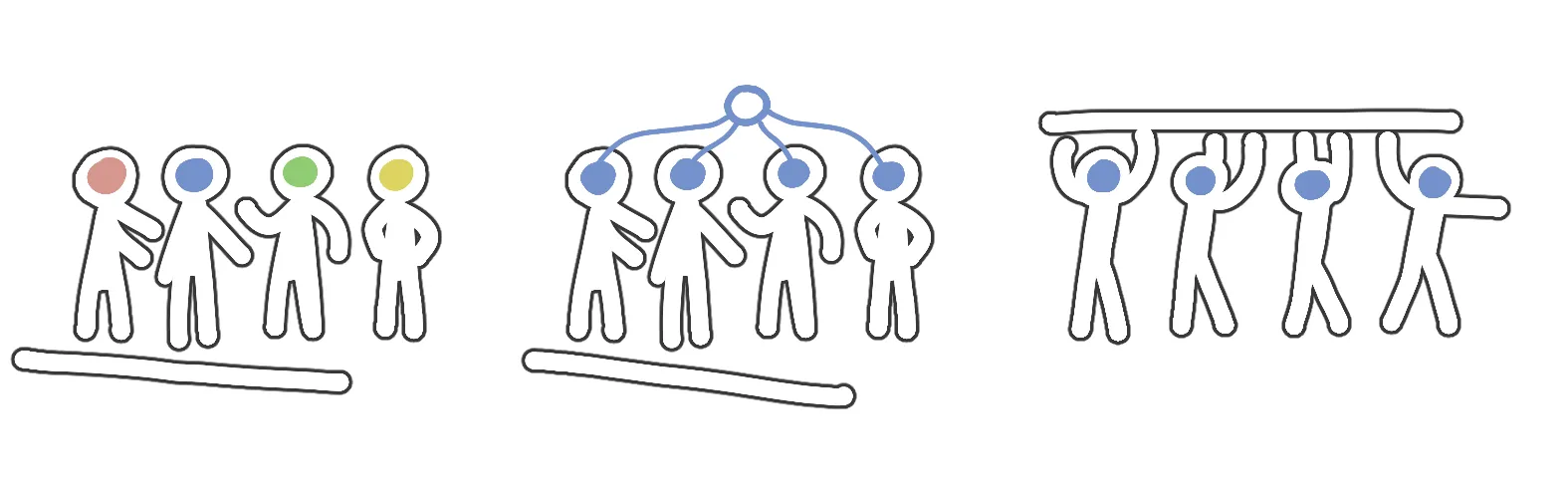
Induce a feeling of being part of a larger organism, share a collective physical pain from selfish in-game actions, and shift away from hyper-individualistic ways of thinking.
// design
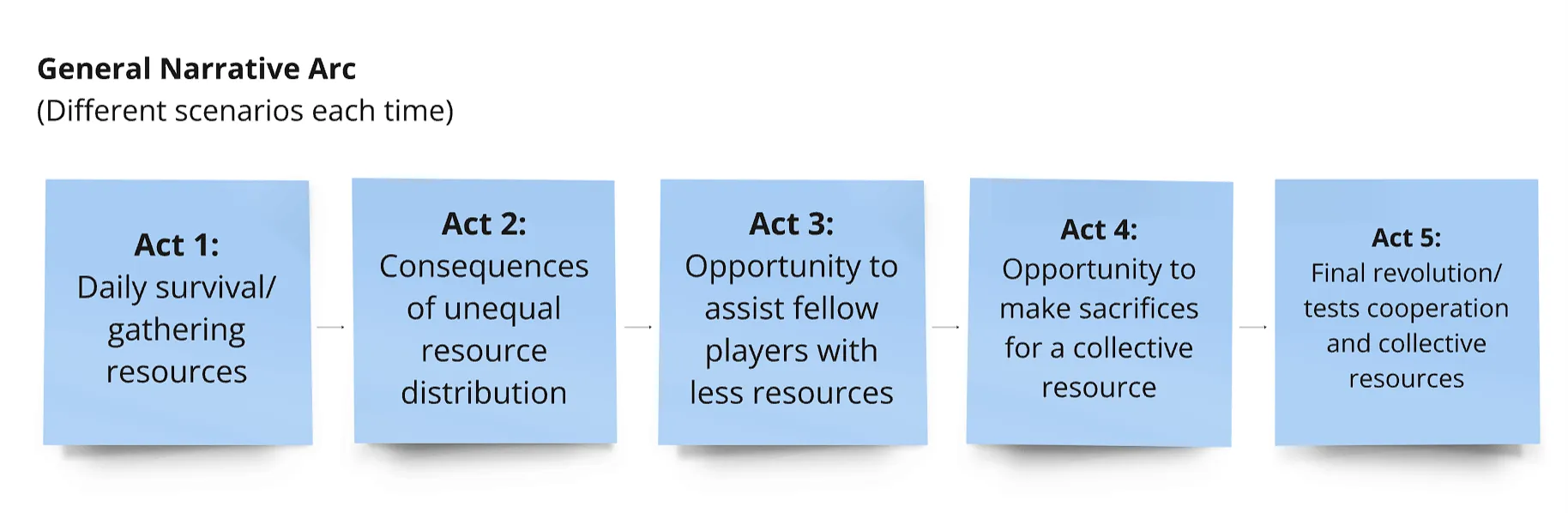
The game follows a linear narrative: the series of scenarios creates a general arc. The exact scenarios/questions differ each time for replayability.
// gameplay
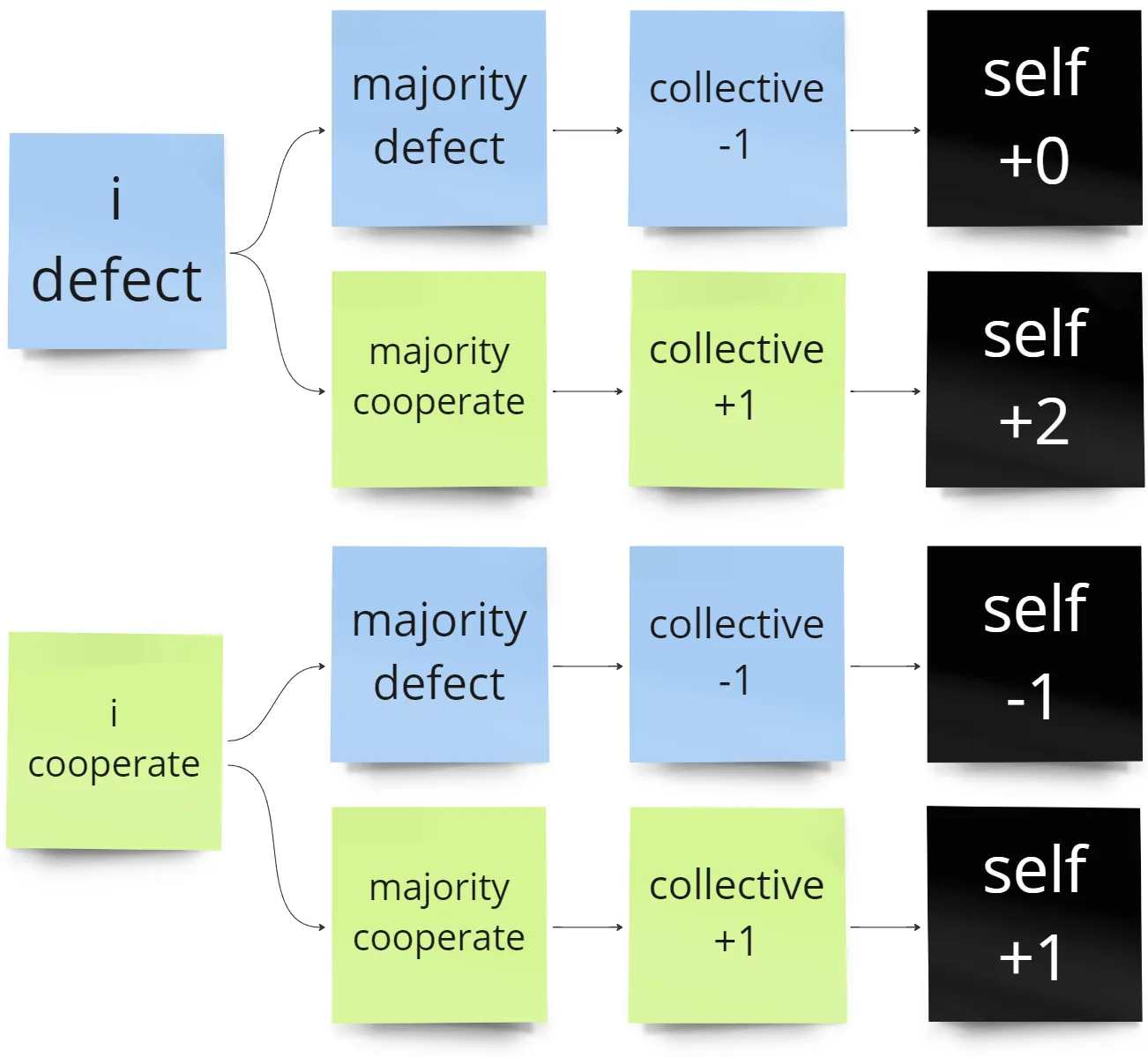
Players each have an individual score and the Octet has a collective score. The individual choices made in each scenario affect both scores. The objective is for all players to survive all scenarios, balancing self-interest with the good of the group by keeping their individual scores and the collective score above 0.
Point calculations take inspiration from the Prisoner's Dilemma. The selfish option is always the rational choice, but only the collective option will result in the greatest mutual benefit. This reflects real-world scenarios and models how we make selfish decisions despite awareness it is to the detriment of the group.
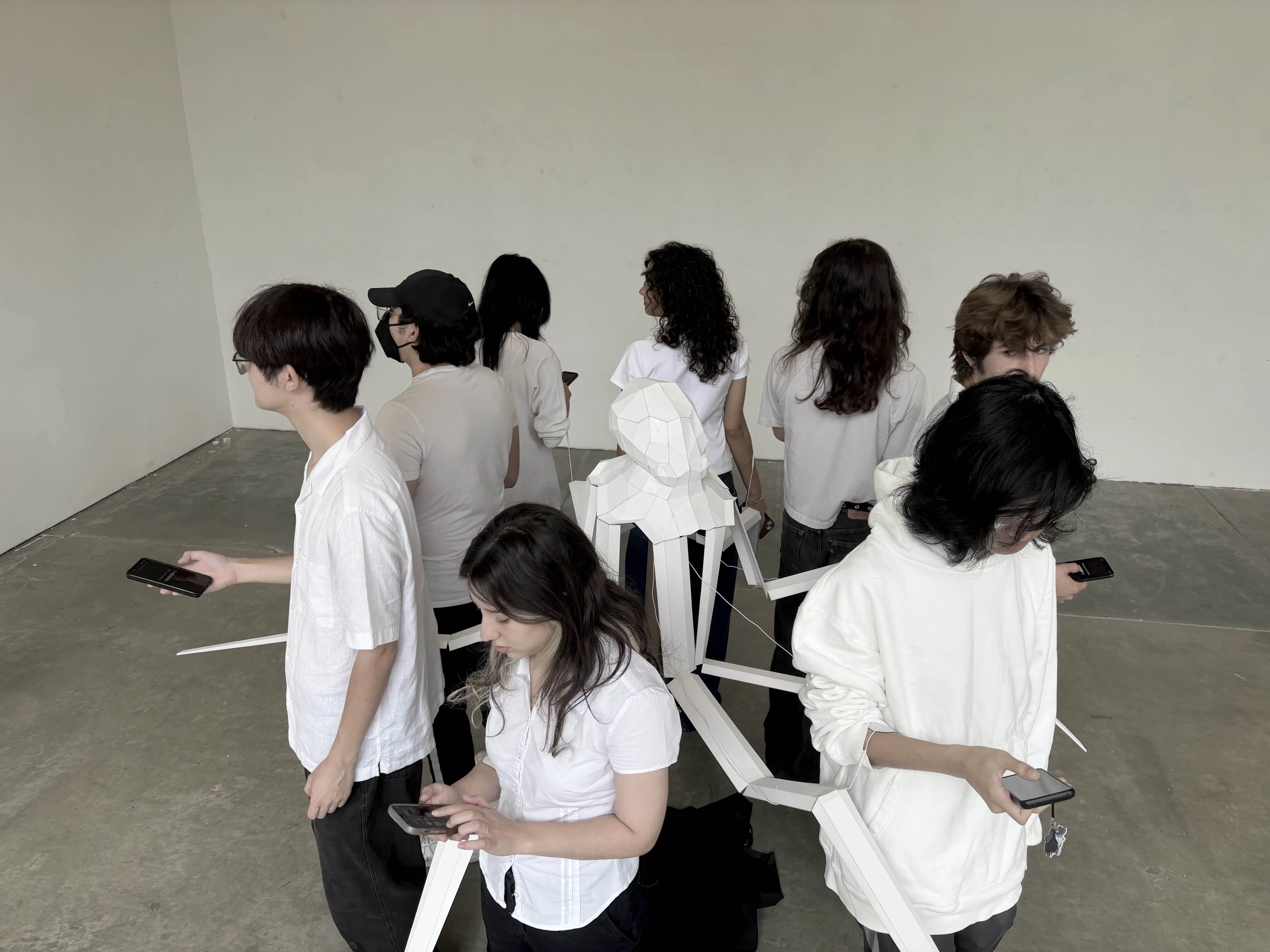
However, we chose not to make the decisions completely blind: players can move/wave their arms in octopus-like manners to indicate which choice they intend to select. This limited signaling between neighbors more accurately reflects the extent of communication in real-world decision making, where people act with awareness of the societal choices of their close circle.
// ui design
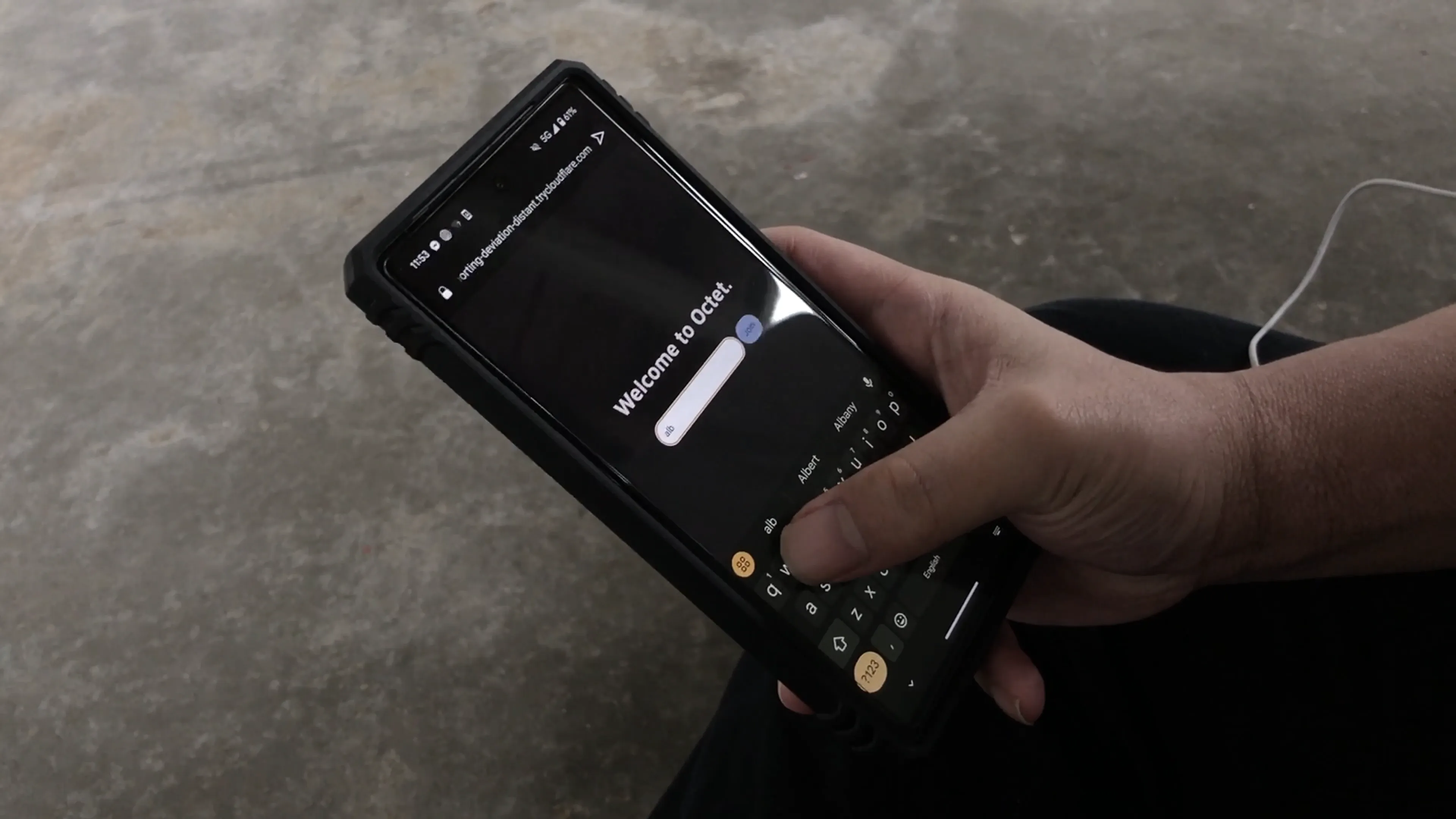
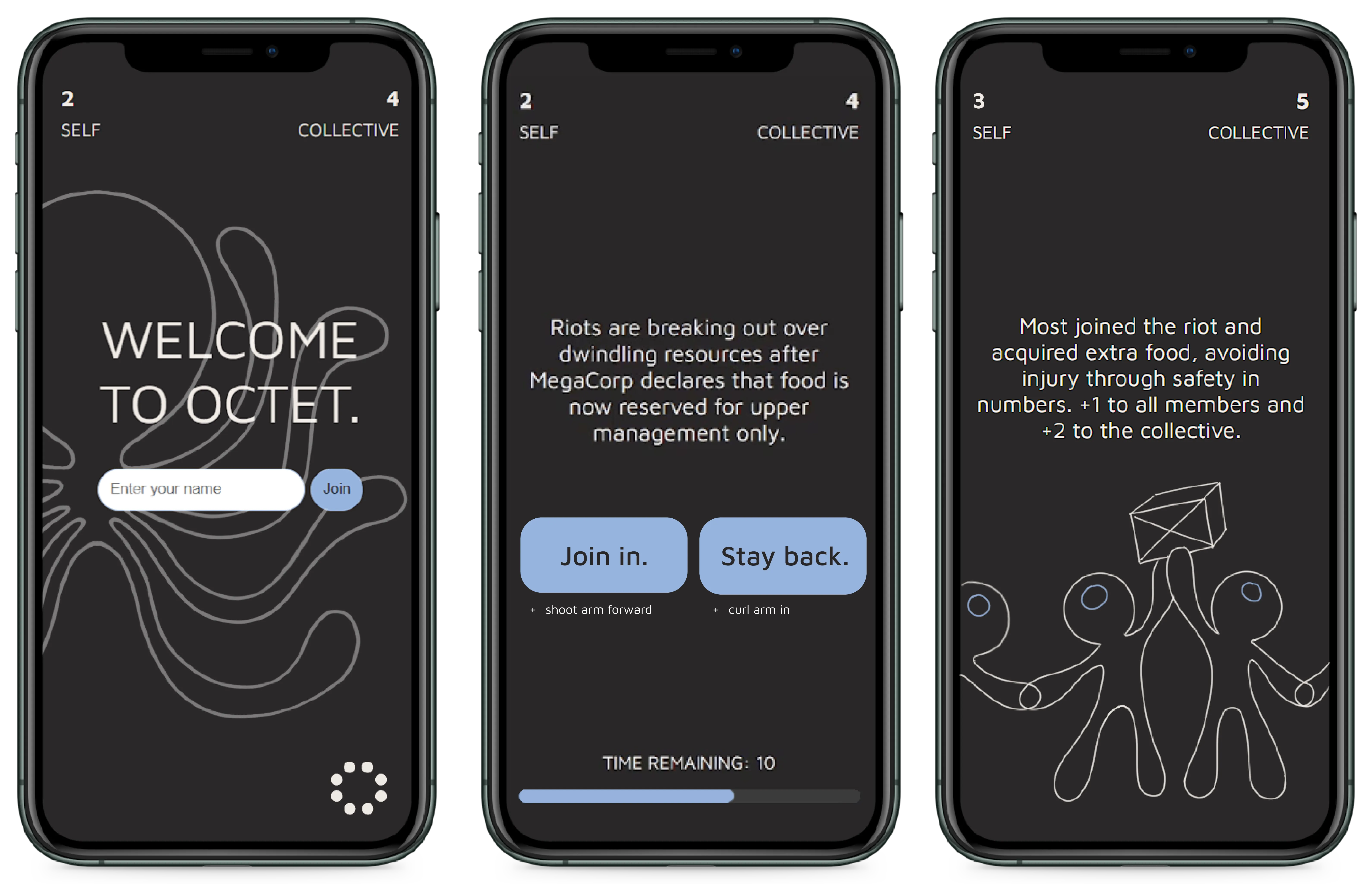
The UI is kept minimal and clean, with a dark background to imitate the ocean's depths and lighter whites and blues for the interactive elements. Thin circles reminiscent of octopi suckers create a recurring motif.
// prototyping
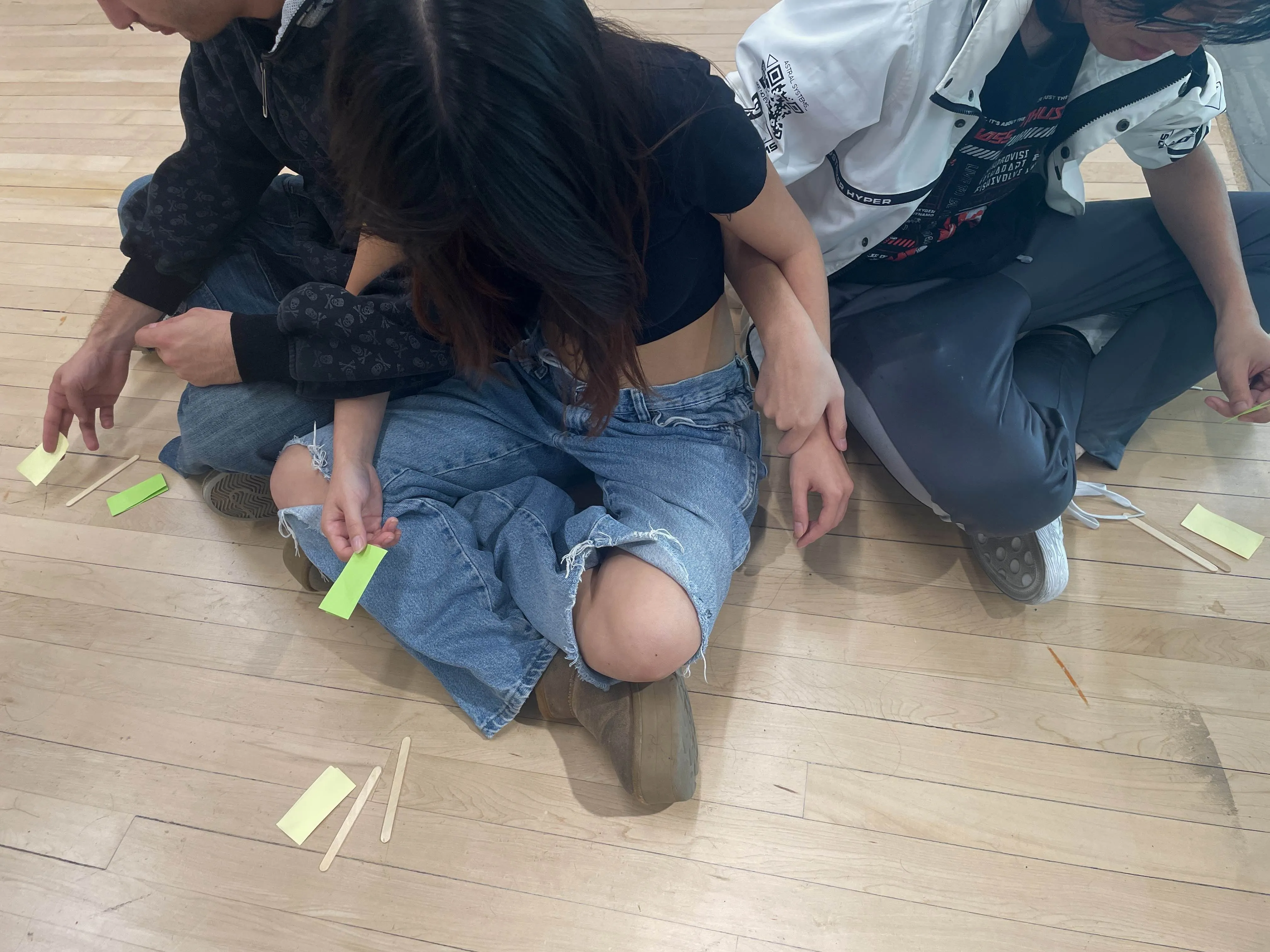
We first underwent several rounds of playtesting to refine the flow of experience. The first playtest was conducted in a purely analog fashion—we used popsicle sticks to represent points and colorful sticky notes to indicate choices. Questions were read aloud to participants.
After integrating the TENS, a participant noted, "The [nerve stimulation] was unexpectedly intimate...I thought it would be a sharp shock but it felt almost like a heartbeat running though the group."
// implementation
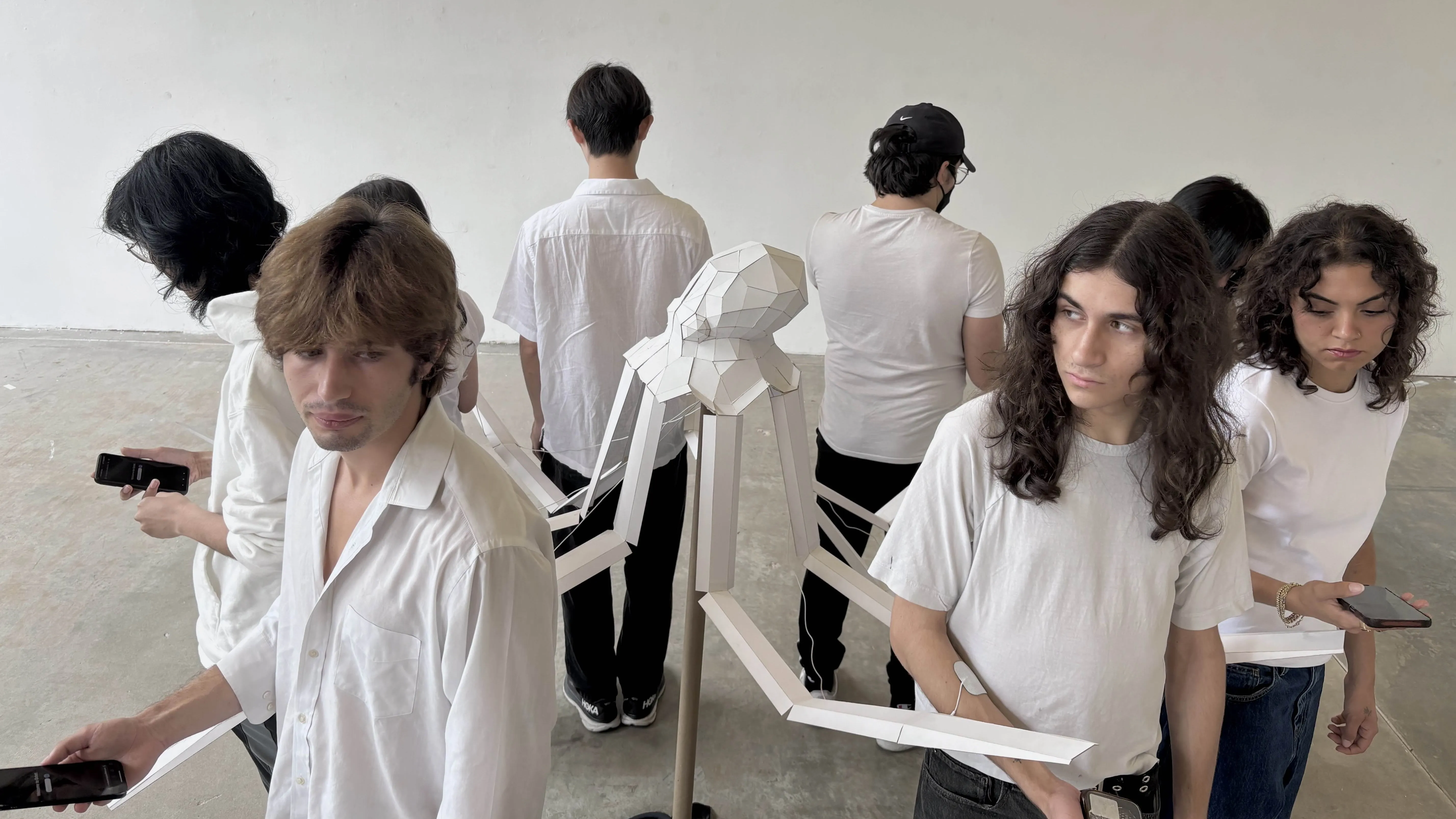
The final game is browser-based and operates on a client-server model. My Python script manages the game logic and uses Flask and Socket.IO to communicate between devices. Client-side interfaces are HTML screens. We soldered wires to the button pads on the TENS so we could simulate button presses via Arduino. We sculpted a paper octopus-shaped housing unit to hide the circuitry.
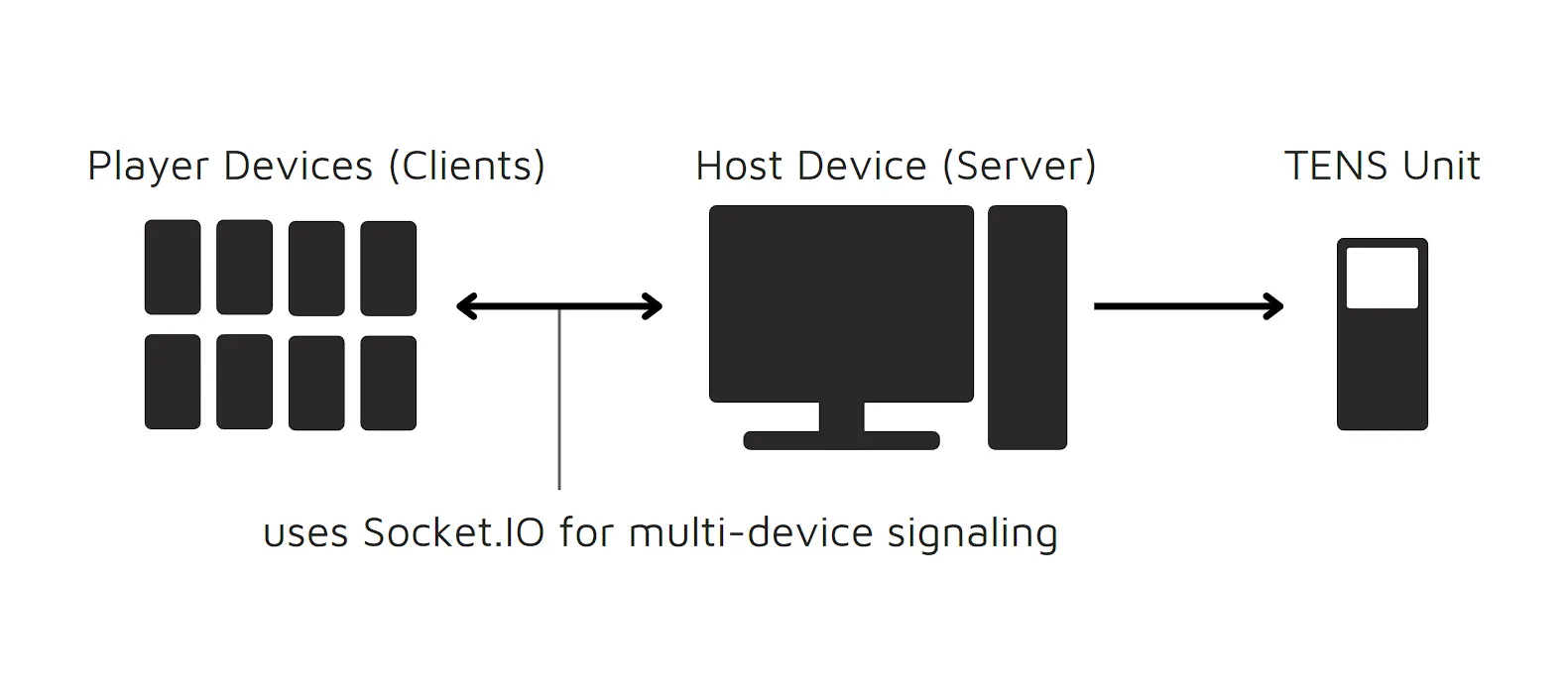
We used a 4-channel TENS unit for the nerve stimulation. We set it to the pulsing configuration, emulating a light tap at lower voltages and rhythmic "thump"/pinch at higher voltages that visibly jerked the user's arm.
One pair of electrodes forms a closed circuit, but we only had one electrode (4 channels = 8 electrodes) per person. We instructed players to hold hands with their neighbors so each pair of players would complete a circuit. Participants reported that holding hands with their neighbors heightened the sensation of the current and their awareness of the others when making their game decisions, creating the connection we aimed for.