BeBoulder!
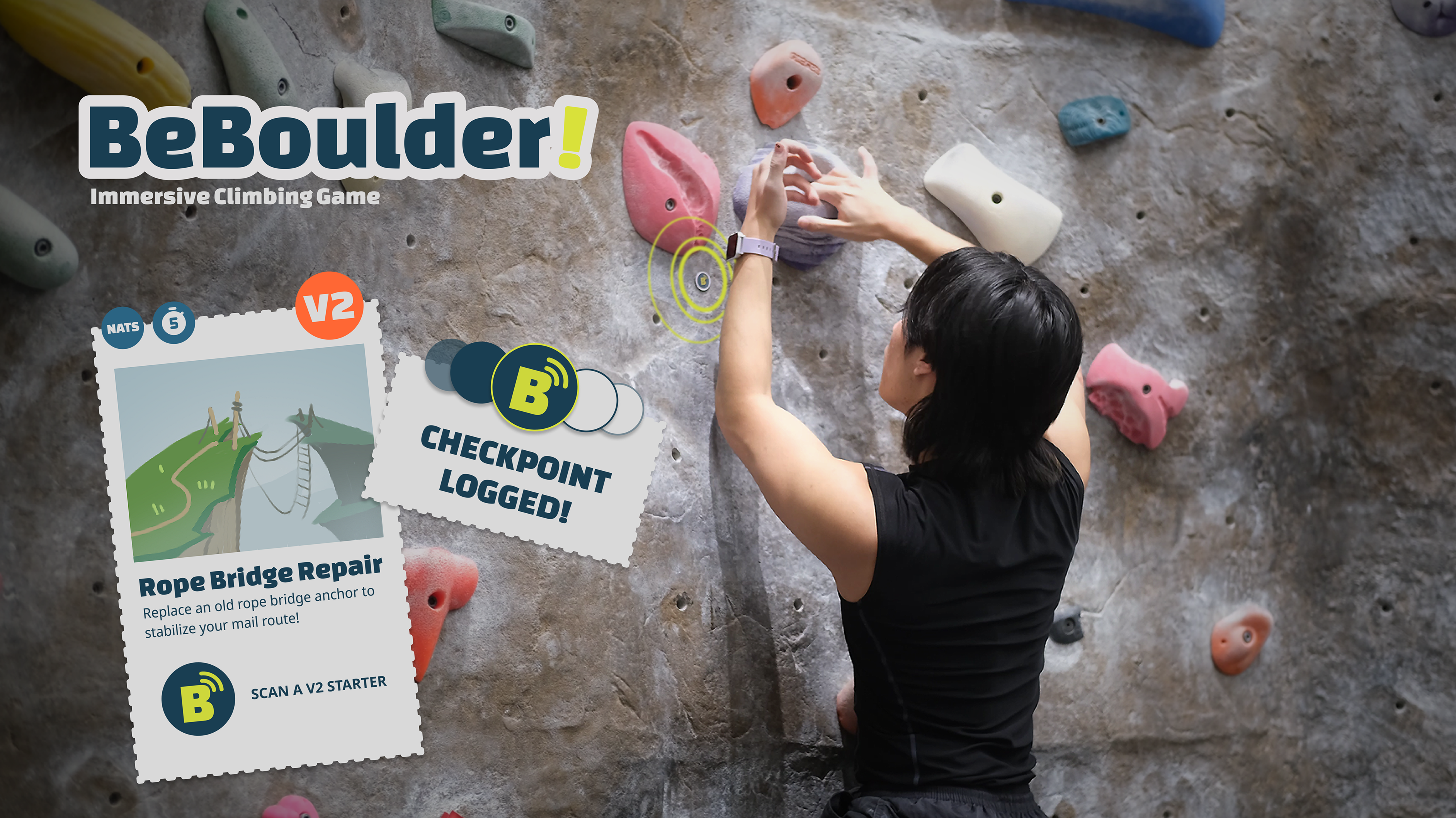
BeBoulder reimagines the physical act of climbing as a mechanism for immersive, narrative-based gameplay.
context
academic project
role
designer UX researcher developer
timeline
fall 2024 8 weeks
tools
figma ethnographic research
// background
The sport of bouldering, or climbing without safety ropes, is experiencing a huge boom in popularity. Bouldering has a low barrier to entry, is easily adaptable to diverse “playstyles,” and has a vibrant community/social aspect despite being a generally single-player sport.
As someone who doesn't climb, but has many friends in the sport, I wanted to know what makes the bouldering community unique and how I could design an immersive experience tailored to their interests and needs.
// research
Over the course of two months, I conducted in-depth research on bouldering using the following methods. To guide my research, I asked, what unique aspects make bouldering appealing? Where are the pain points?
User Interviews:
7 long-form interviews and short gym chats
Ethnography:
Active participation in climbing community
Archival Research:
Web archives, social media, documentaries
Observation:
On-site observation, photo/video documentation
// results
Overall, data confirmed that bouldering was a sport currently trending in popularity and that it had a vibrant social community behind its growth. The user research revealed several unique aspects of bouldering:
Adaptability: There are different betas (strategies) for different bodies (flexibility, strength, height)
Problem-Solving: Modular route-setting allows for diverse route types and approaches (dynos, crimps, slopers)
Social Fun: Intermittent activity allows for social downtime and community building
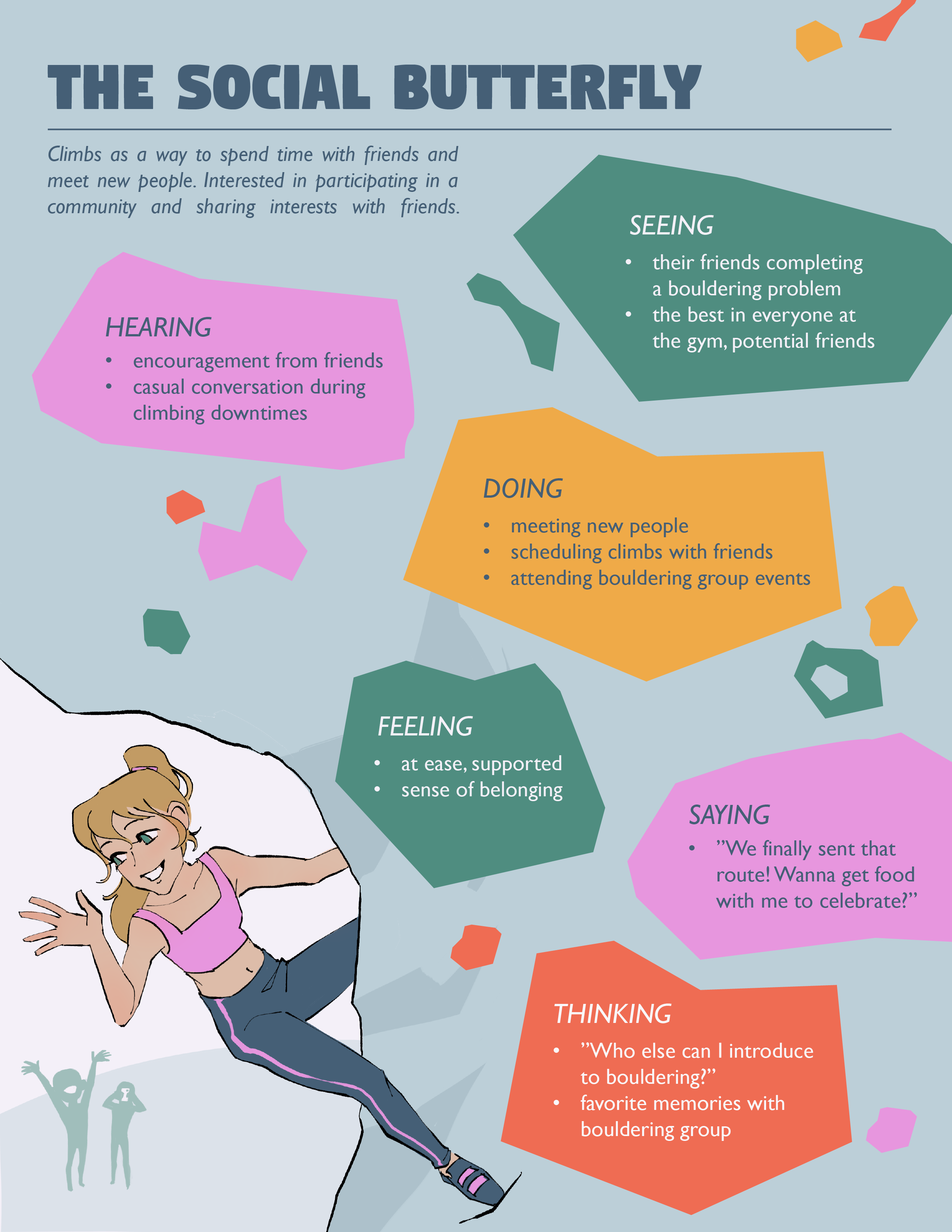
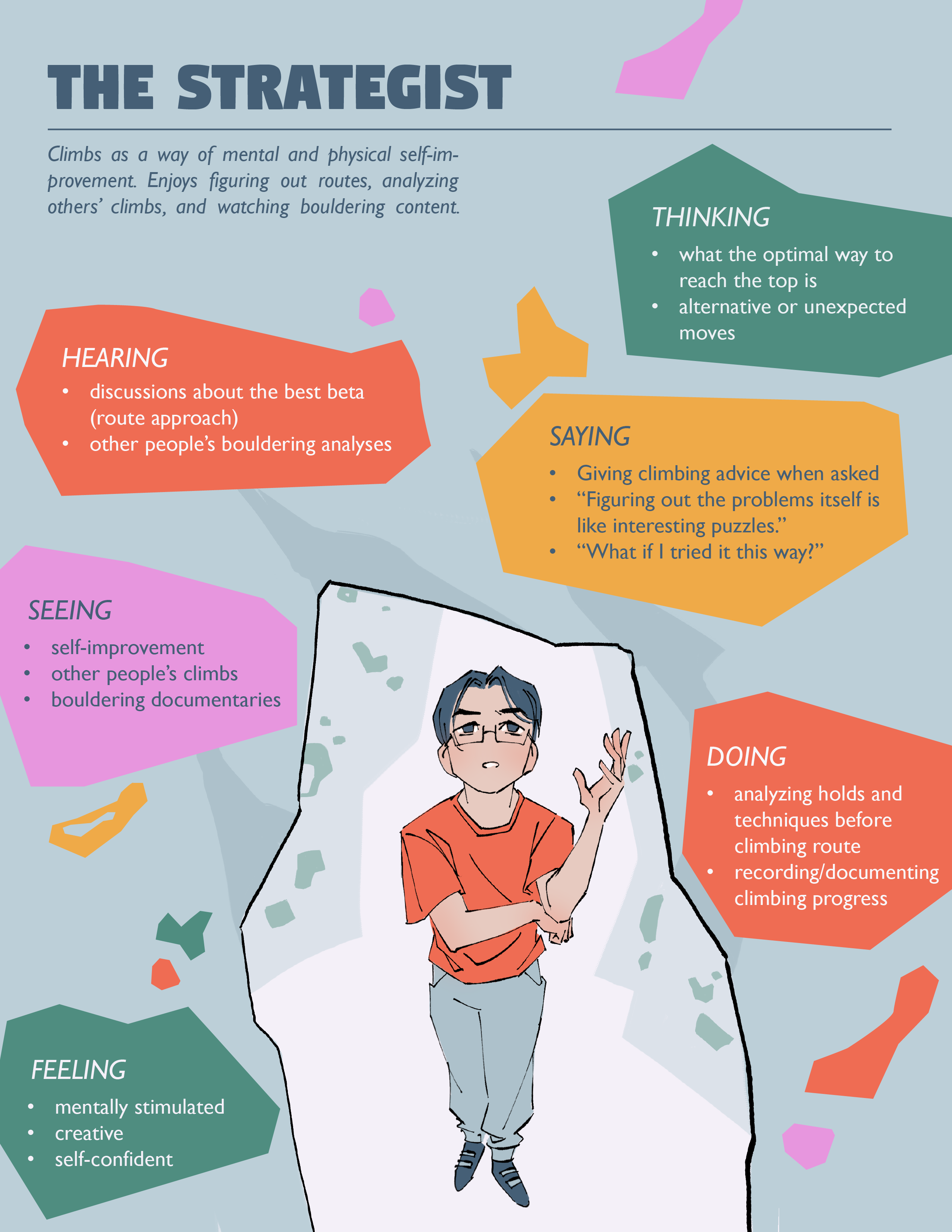
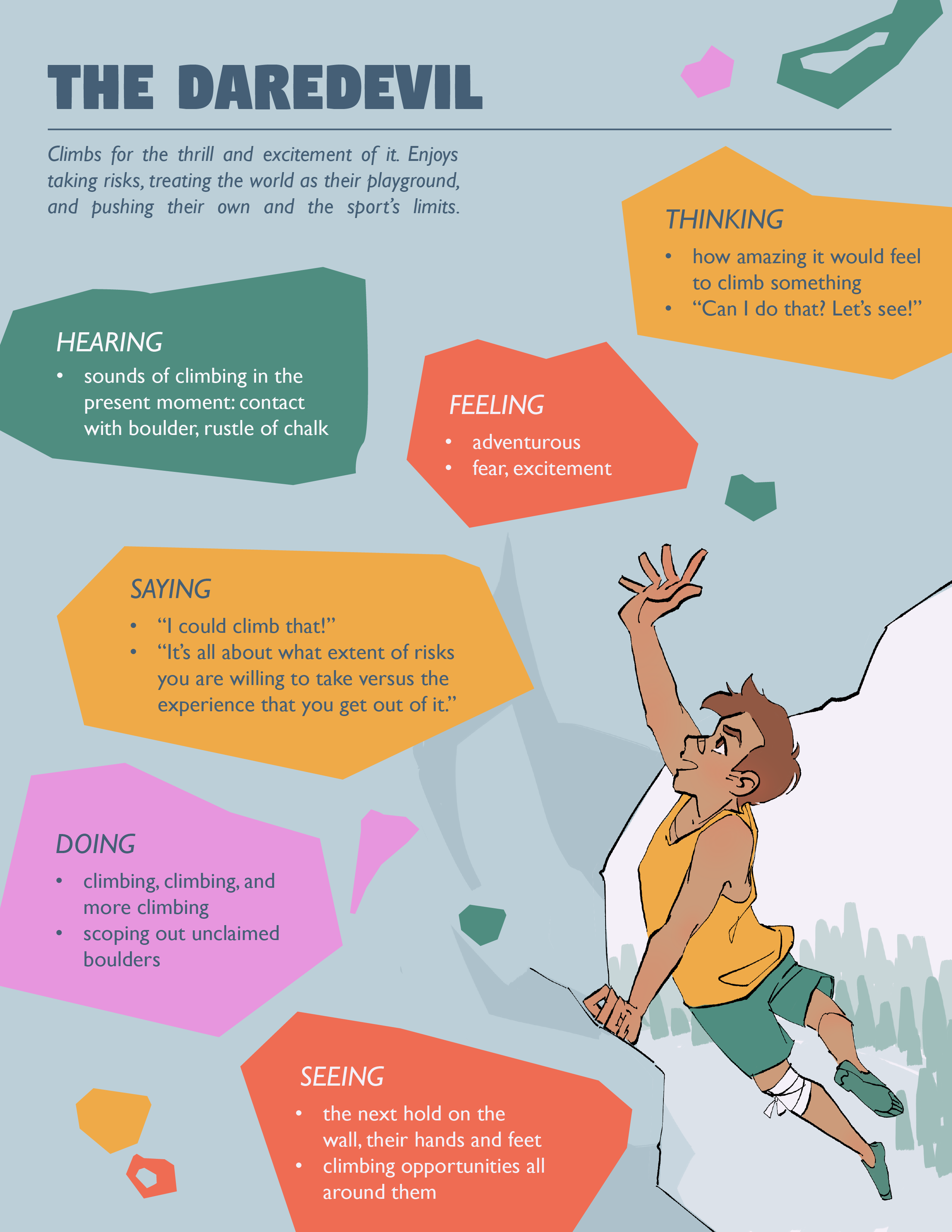
These aspects can be further consolidated into three distinct personas, or user groups, that love bouldering.
// concept
Although users were generally highly satisfied with bouldering all-around, there was one small pain point that stuck out repeatedly: Having the same goal (reach the top) every time felt repetitive and caused on/off cycles of participation.
To address this challenge, I envisioned bouldering as a mechanism for a narrative-based adventure game that would provide progressive rewards for route completion and also leverate each user type's motivation to climb.
How can we increase replayability and reward progression within the bouldering experience?
// iteration
I originally wanted to make the experience as immersive as possible: projection mapping, reactive audio, even custom themed climbing environments. However, this idea was both tricky to implement and also not befitting of what the audience wanted.
Climbers truly enjoy the physicality of the climb, so even though this was an "immersive experience" it had to immerse the user in a way that didn't also conflict with the reality of climbing. The narrative needed to create a little bit of novelty from repetitiveness, not the climbing experience entirely.
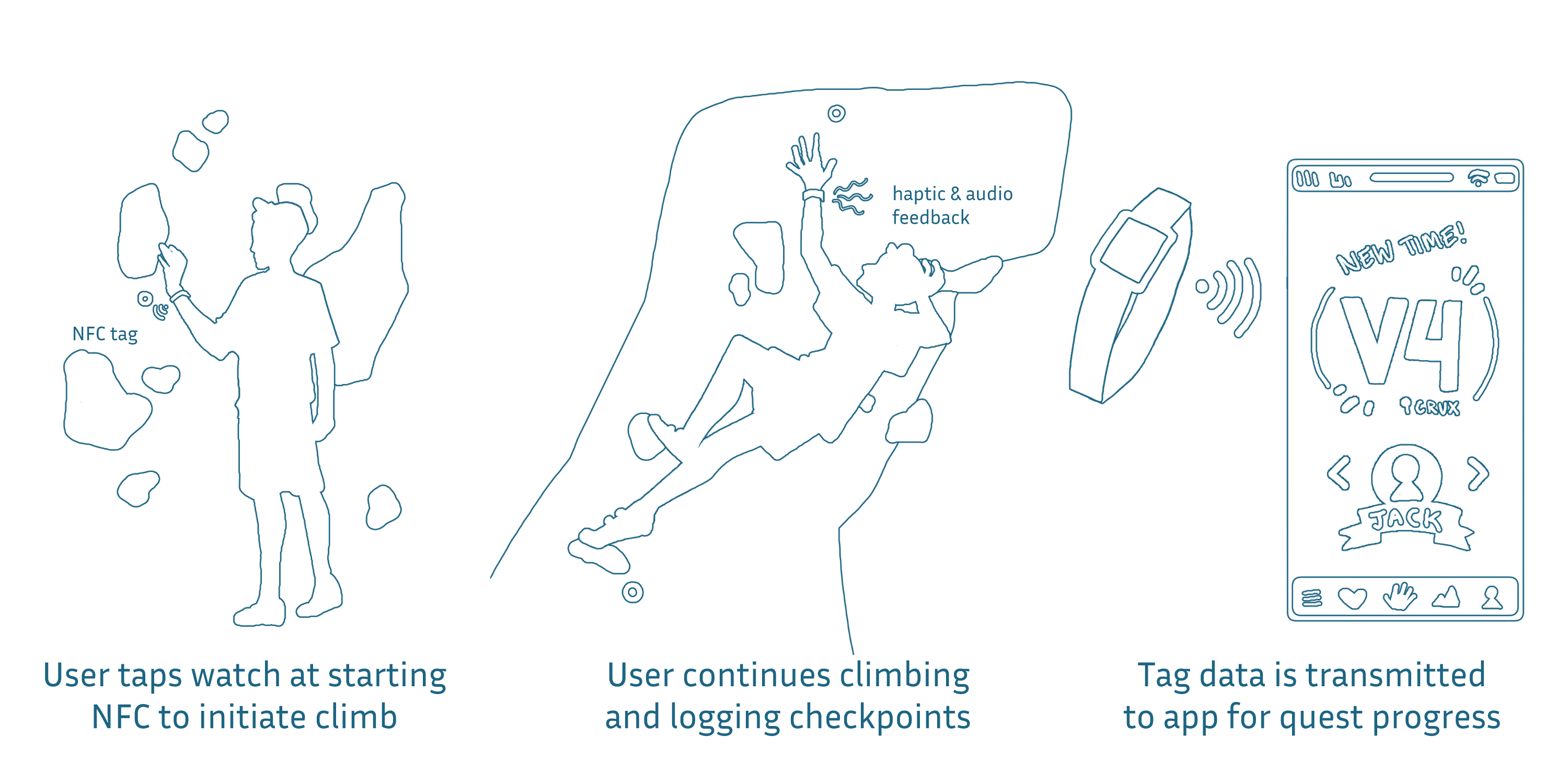
// mechanics
Climbing is the mechanic through which story choices and storyline progression are made. Each completed bouldering problem is a quest that builds up to an overarching narrative goal, providing a progressive incentive that eases feelings of repetitiveness. Similarly to roguelite video games, repeated runs create quantifiable skill progression, and a game format creates opportunities for themed story "adventures" and social community.
1 climbing route = 1 quest in adventure
A progressive series of routes = 1 adventure
The game experience has features that cater to each persona/player type in the bouldering community while addressing the primary pain point of repetitiveness through narrative progression.
Social Butterfly: multiplayer quests, profile and progress sharing
Strategist: V-grade level progression, narrative problem-solving
Daredevil: timed challenges, haptic immersion
// prototyping
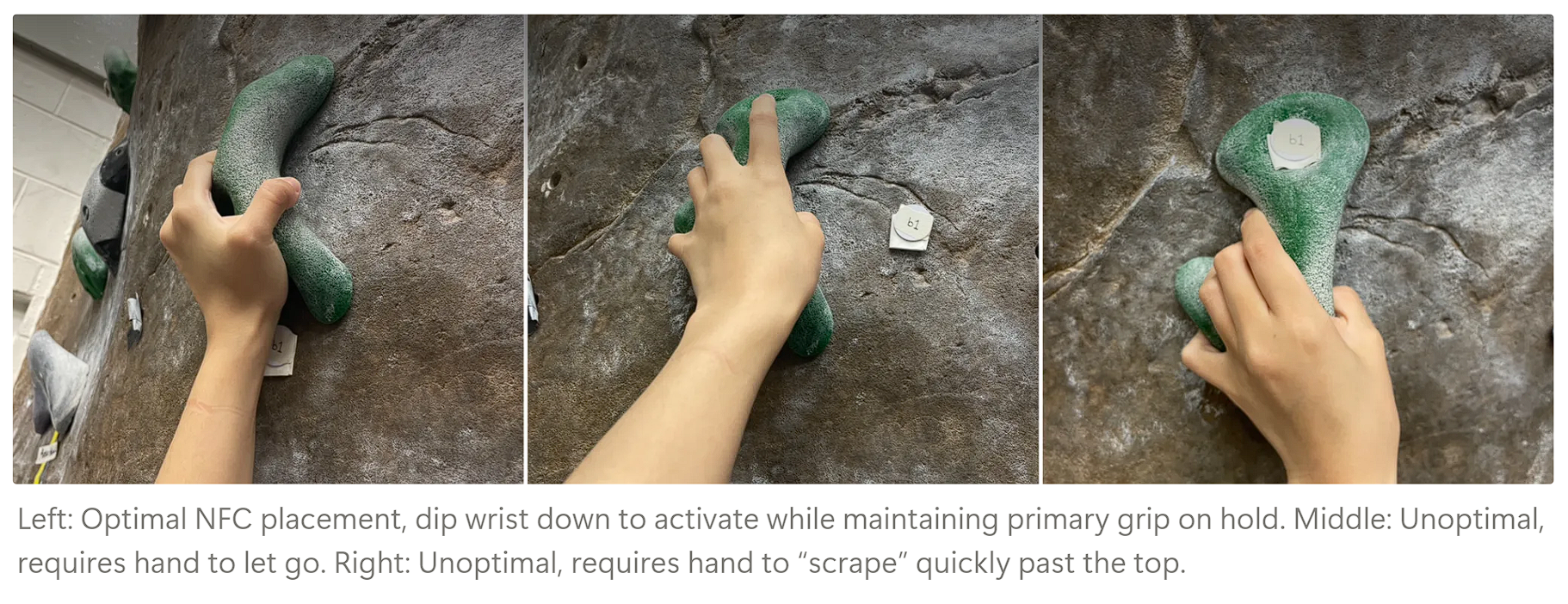
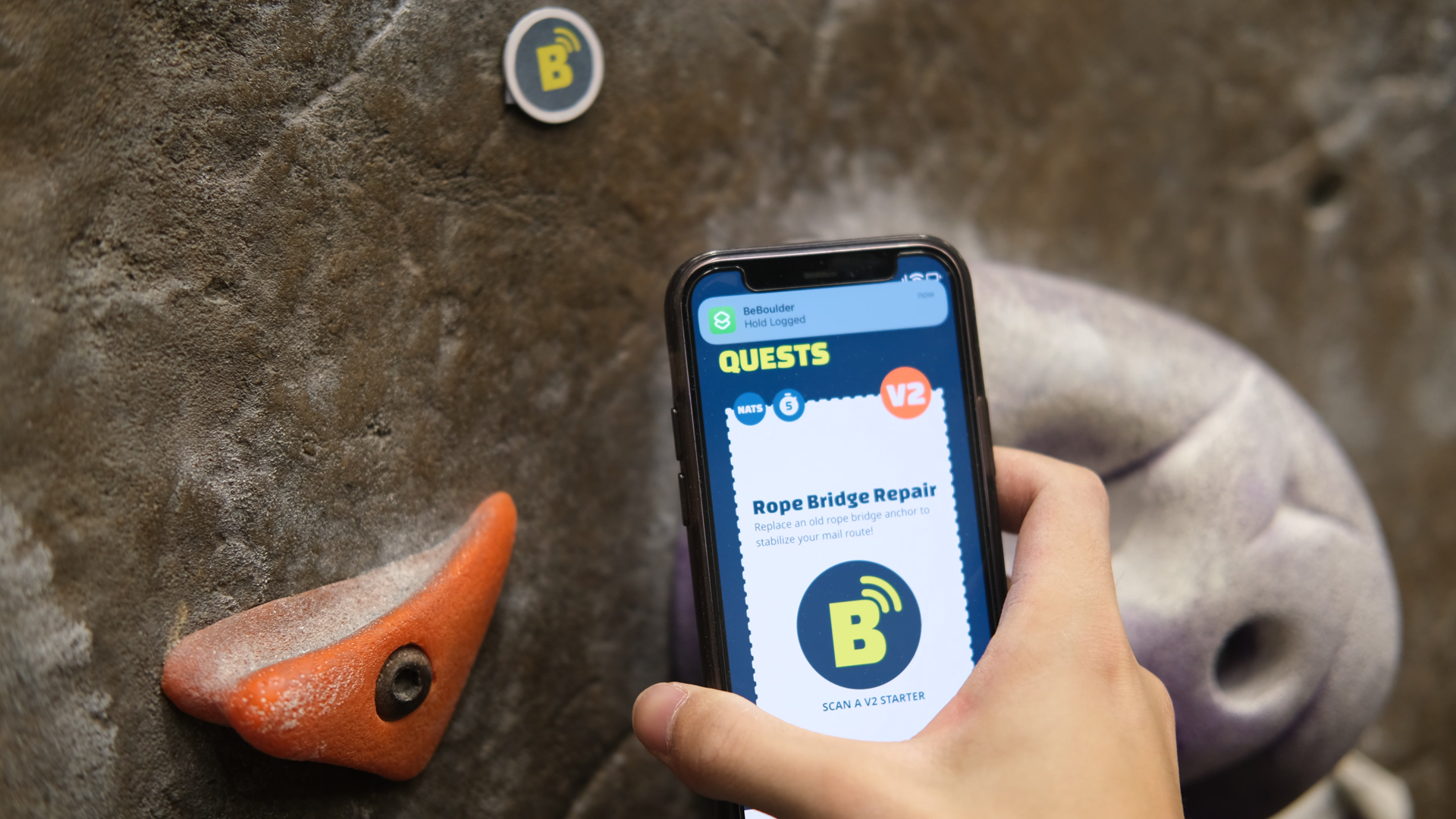
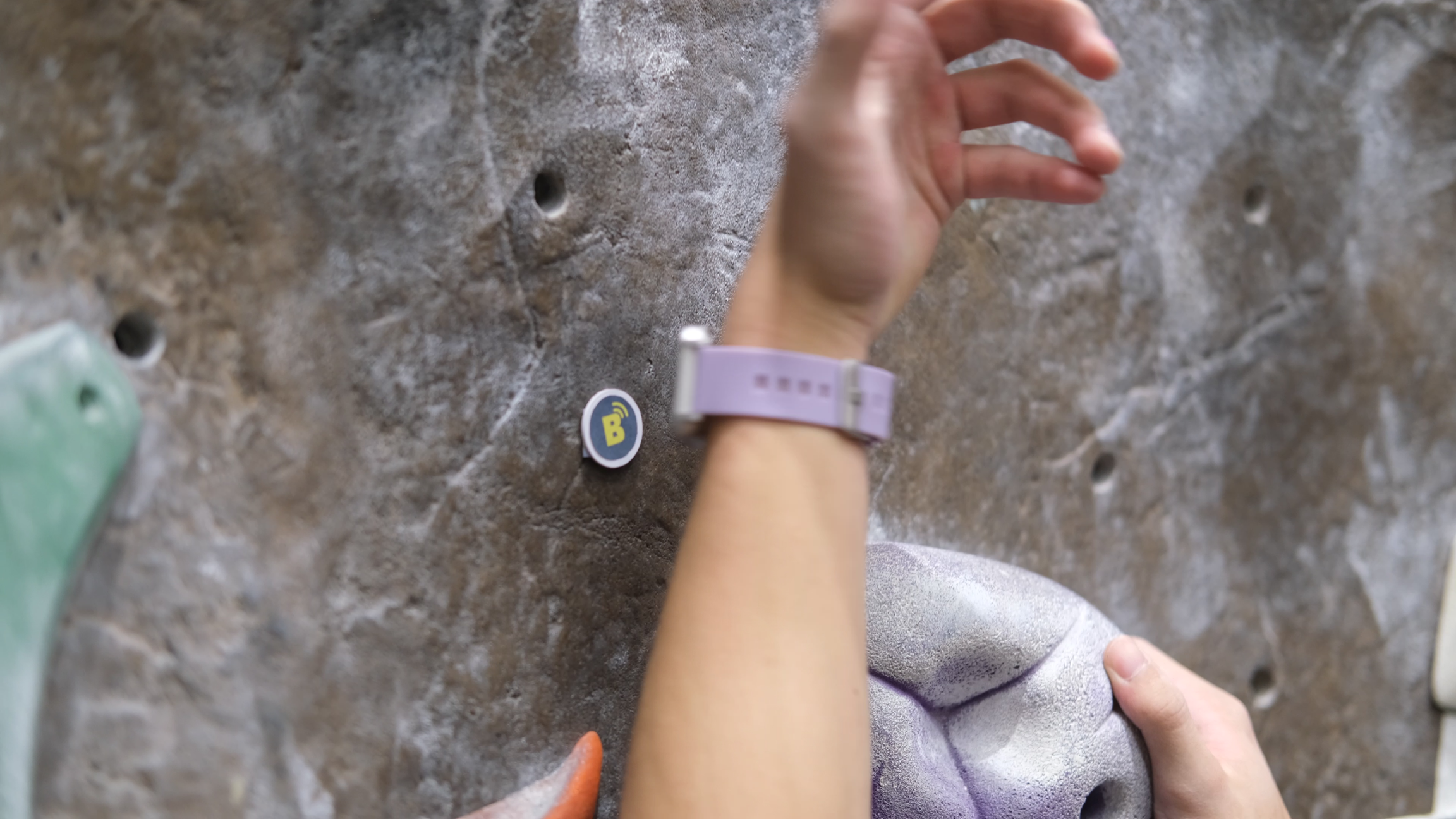
Based on the concept, wearable technology (smartwatch) is the ideal affordance for this interaction. Smartwatches can read data from NFC tags, which are low-cost and easy to install at gyms, and allow for a seamless experience that doesn't distract from the physicality of bouldering. Multiple rounds of user testing were conducted in collaboration with the Climbing Wall at Gregory Gym.
// design
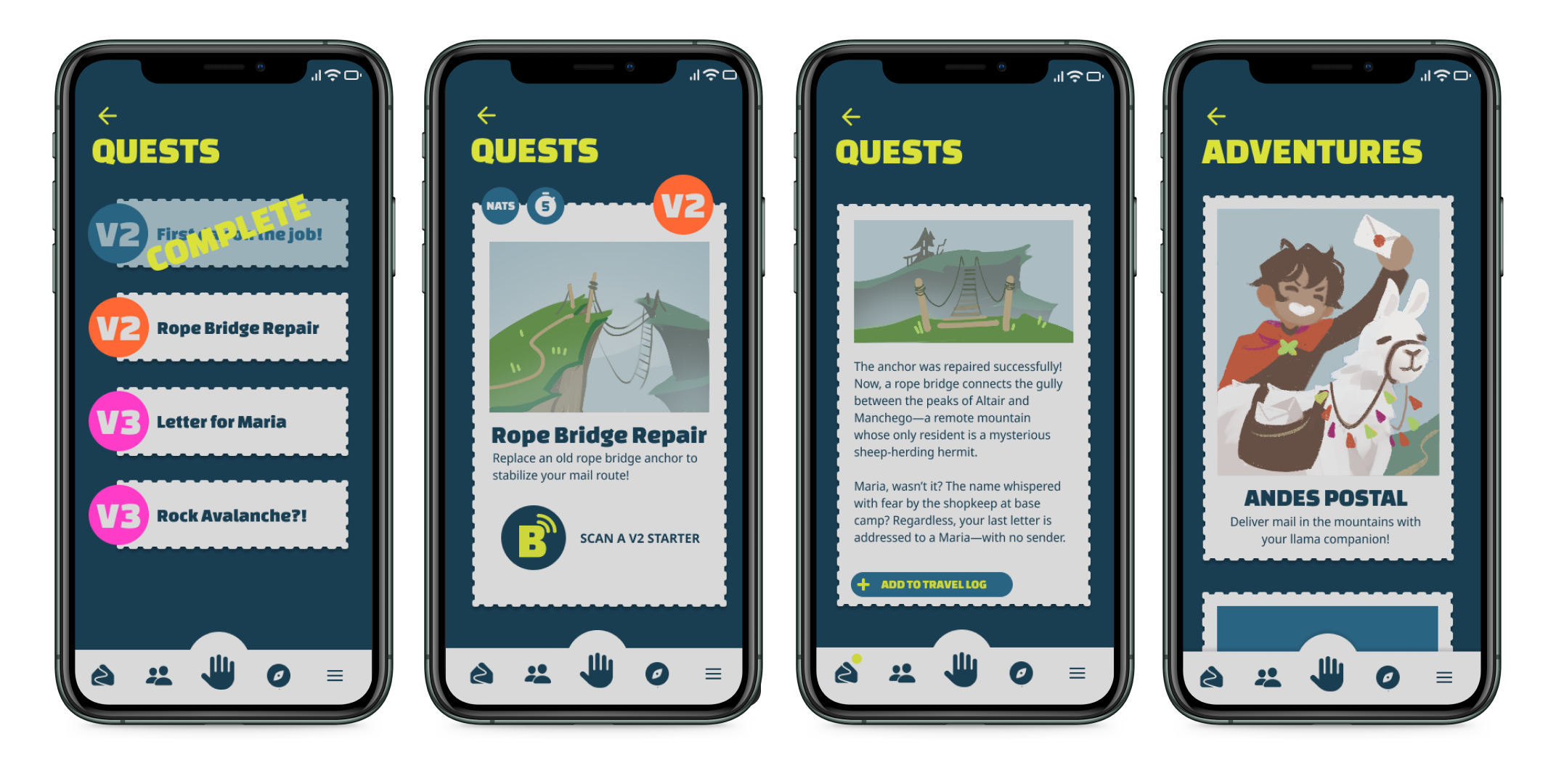
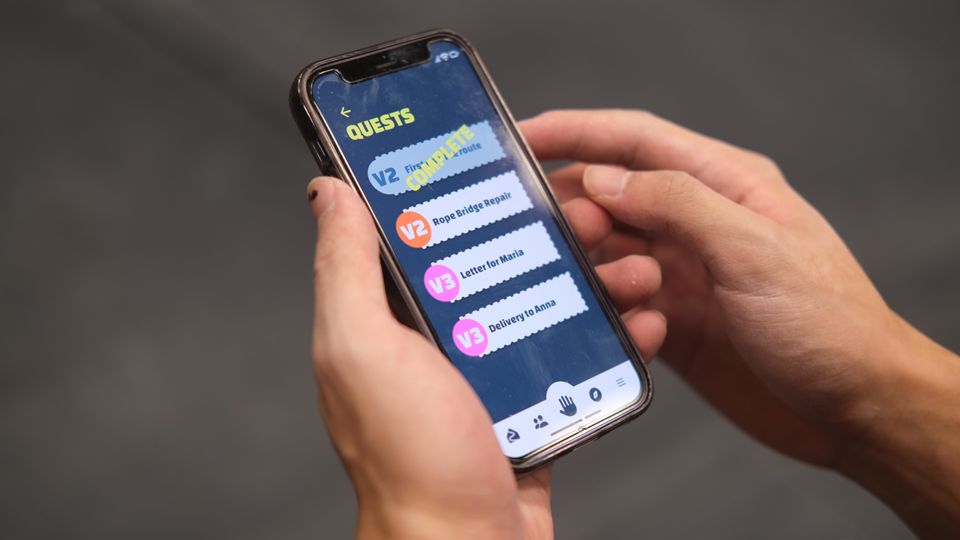
Interface design prioritized a colorful, playful UI reminiscent of multicolored climbing holds. Using Clip Studio for the narrative illustrations and Figma for the interactive prototype, I created a demonstration user flow for the Andes Postal story, for a user climbing in the V2-low V3 range.
Andes Postal
You are a postman in the Andes Mountains with a trusty llama steed! Complete climbing quests to repair mail routes, dodge avalanches, and deliver letters between two enemies from opposite peaks...and potentially spin them into a love story!
.png)
// outcome
BeBoulder was physically installed at Gregory Gym at UT Austin, and users were able to demo a short quest! Participants liked the tag placement and checkpoint system, and said the narrative mechanism made climbing interesting without taking away the physical fun of it. One participant was particularly excited to do themed quests and share the experience with their friends.